Imagine you are in elementary school, dreaming of becoming the President one day. You are so excited, you rush home to tell your family. Sitting at the dinner table, you look up at your grandfather and tell him, “I want to be the President when I grow up!” You are beaming, expecting him to reaffirm you, support you. Say something along the lines of, “you would be a great President!”
But he doesn’t.
Instead, he laughs. Laughs in your childish face. He wheezes out in between bursts of laughter, “well if you can’t be it, marry it!” The words hit you like a brick. You know he wouldn’t say anything like that to your brother. The questions pour into your head, one standing out: “Why couldn’t a girl be president?” Lucy Irvine ‘27 lived this moment. She “realized that lack of gender equality made no sense, and [she] wanted to do something about it.”
A sophomore recently asked me, “What is feminism?” It seems like a simple question. After all, the word ‘feminism’ is one we hear constantly: in history classes, on social media, in political debates, and in everyday conversation. And yet, the fact that this question needed to be asked reveals something important: despite its visibility, feminism remains widely misunderstood.
For some, the word carries a negative charge. It feels political. Controversial. Even radical. Others, even feminists, hesitate to use the word at all, worried about how it will be perceived. History teacher Ms. Serene Williams notes that, “you rarely even hear me use the word ‘feminism’ — these people will get so defensive.” The reaction to the label overshadows the meaning behind it.
Religious Studies teacher Ms. Teresa Carino-Peterson defines feminism as “the belief that all people are inherently equal and deserve equal opportunities, regardless of gender.” Economics teacher Mr. Steven Saltzgaber echoes this simplicity, saying, “if you boil down to the essence — [it’s] equality.” Irvine also describes it as “striving for equality in all fields and dismantling existing institutions that promulgate inequities.”
At its core, feminism is not about superiority. It does not say that women are better than men. It is about removing barriers — whether social, political, or cultural — that limit people based on gender. Anna Perone ‘28 states this perfectly, saying that feminism is simply “standing up for [the] fundamental rights of all people.”
So why does something so foundational feel so controversial? Part of this answer lies in a popular misconception. Carino-Peterson explains that “the single biggest misconception students have is that feminists hate all men and think they are better than men.” This caricature persists despite repeated clarification. Williams also believes this, saying a “misconception would be that [feminists] hate men.” History teacher Mr. Dan Allari went further to say that people think “that this is something radical.” Saying feminism is radical is the same as saying equality is radical. Which it isn’t. Even the US Constitution states that no state shall “deny to any person within its jurisdiction the equal protection of the laws.” Equality is fundamental.
Yet, despite these foundational principles, equality is still not fully realized, even in places that claim to value it. Misconceptions about feminism are more than just semantic — they obscure the very barriers feminism seeks to dismantle. What may seem like small biases or jokes shape who is encouraged and who is dismissed. Irvine’s experience is a personal example of this, reflecting a broader pattern: society has long sent messages about what girls can and cannot achieve.
At SHP, these dynamics are visible in everyday campus life. Anna Perone ‘28 reflects on how gender expectations affect how female students are conscientious of how they appear, saying she “choose[s] carefully how [she] present[s] [her]self to the world because it really matters.” She continues to say that she “feel[s] like for a lot of men, it doesn’t matter as much to them.” Vivi Zuck ‘28 adds another layer to this, noting, “I’ve found this dynamic of being the person who stands up or tries to be greater is not often liked by other people… [and] if I put in a lot of effort… [they say I’m] trying too hard.” The implication is clear: social norms evaluate women more harshly for ambition, confidence, or assertiveness — qualities celebrated in men but scrutinized in women.
Saltzgaber states that “there’s absolutely nothing that says that a male in an economic classroom is better,” yet assumptions persist, privileging certain voices and undermining others. He adds that when he first became a teacher here three years ago, he thought “there was an ethos amongst the men that they could do whatever… they wanted.”
Harmful stereotypes, whether subtle or explicit, restrict not only women but also men who feel constrained by traditional expectations of masculinity. As Irvine explains, feminism “benefits all because it dismantles structures that make it harder for men who aren’t interested in the traditional roles promoted by toxic masculinity as well as women.”
Understanding feminism as a tool to help dismantle systemic barriers brings the movement out of a radical ideology and into daily life. Allari notes that “there’s an identity that comes from within, and that’s not being pushed or forced on them by external factors, by society.”
Feminism is both a lens and a practice. It allows us to see the limitations imposed by outdated norms and motivated action to remove them. It is about questioning who is encouraged to dream, who is supported in those dreams, and who is told to adjust their ambitions to fit in society’s box.
Still, misunderstanding the meaning of feminism isn’t just a matter of semantics or personal discomfort — it is currently having real consequences in education and academic spaces across the United States. Gender Studies programs, Women’s History courses, and related fields are being reduced, restructured, and eliminated. For example, Texas A&M University, one of the largest public universities in the country, recently announced that it will end its Women’s and Gender Studies degree programs after new system-wide policies restricted classroom discussion of race and gender topics and led to hundreds of courses being reviewed and altered. These changes are designed to “protect academic integrity and restore public trust,” said Tommy Williams, the university’s interim president. An NPR article labeled this “as part of a broader effort to eliminate teaching related to diversity, equity, and inclusion (DEI).”
Saltzgaber speaks to this societal regression, saying, “it disturbed me to watch this regression… There’s absolutely no need to go backward right now… There is more of a need for feminism now.” Saltzgaber continues to point out another issue in this area, saying, “you’ve got the issue where this entire peninsula is going ‘bro-ish’… And that’s ridiculous.”
Carino-Peterson is also “troubled by the rise of ‘trad wives’ social media influencers.” “Trad wives” is a trend gaining momentum on social media, standing for “traditional wives.” Carino-Peterson continues to say that she “think[s] they twist the message of freedom from gender norms and constraints to say that ‘real’ feminism is conforming to these traditional female roles as subservient to their husbands.” However, she notes that “there is no one way to be a female, there is no one way to be a wife. And there should be no pressure to act a certain way.” Irvine also speaks to the influence social media has. She points out how “the media has long focused on amplifying the worst or most shocking parts of feminism. Women were vilified first for wanting the right to vote, then for bodily autonomy, and today for continued political and economic equality.” She also gives voice to the fact that “Feminists were portrayed as radical and direct destroyers of the traditional and comfortable status quo.” This then makes them an easy scapegoat for others in society, in part playing into the “trad wife” culture to distance themselves from the supposed “man-hating” women.
The question Irvine asked in the beginning, “Why couldn’t a girl be president?” remains relevant today. As Allari observes, “If we’re saying this is wrong in 1917, how can we not then notice that we haven’t had a female president?” Structural barriers, implicit bias, and societal expectations is the answer. Saltzgaber emphasizes that “there [are] structural things that have to be challenged.” And that it is “a fight that everyone has to fight.” Feminism is not just a movement for women, it is for everyone. For everyone to fight against systems holding others down.
Irvine reminds us that “harmful gender stereotypes and language hurt everyone,” shaping who feels empowered to pursue ambition and who is dismissed in elementary school, before they even get a chance.
Zuck adds a simple, yet profound perspective, urging the guys out there to “be a good guy.” To actively support equality, speak up against bias, and not talk over the women in your class.
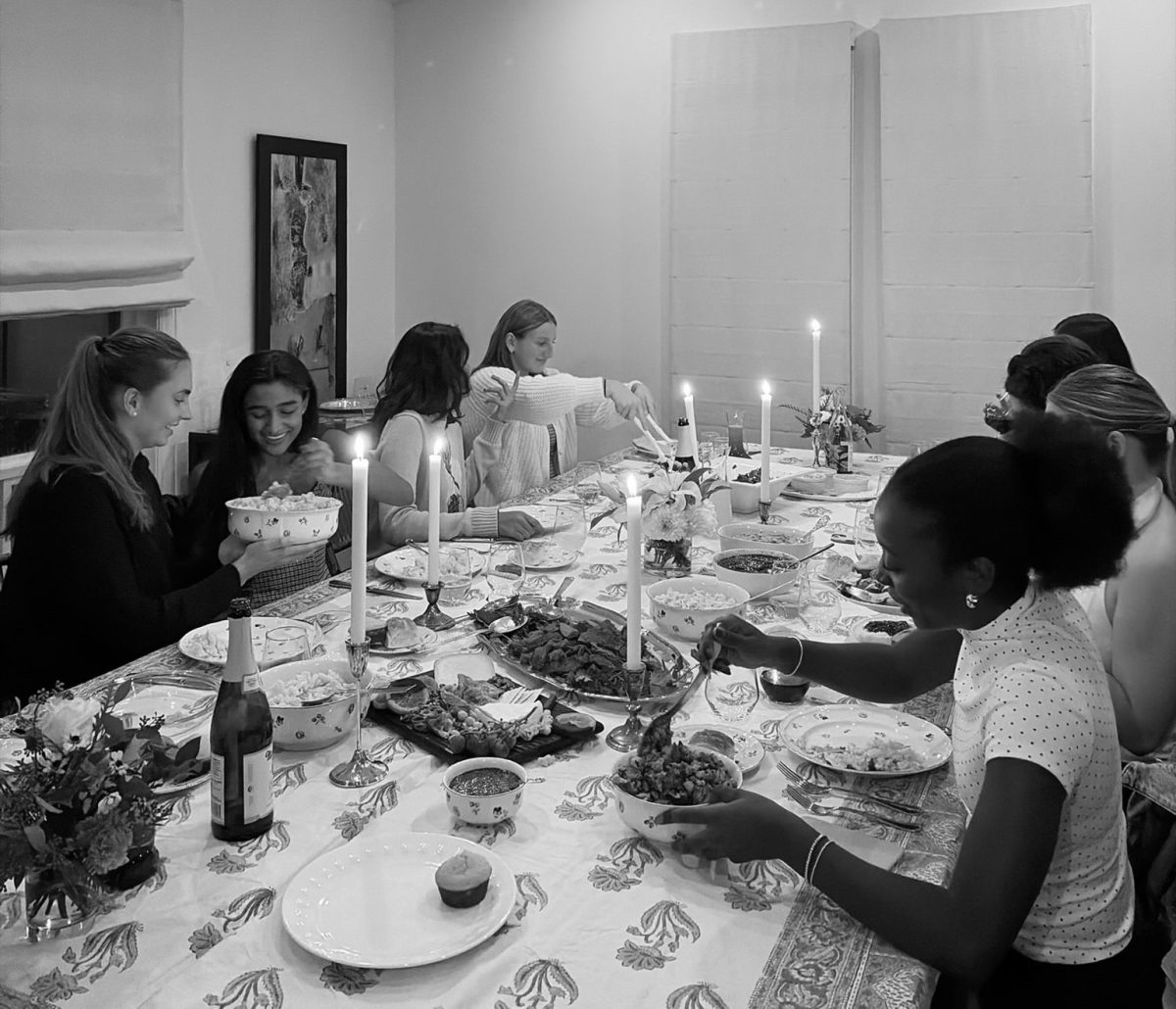
Ultimately, feminism asks a question as fundamental as Irvine questioned as an elementary schooler. Who gets to dream, and who is supported in making those dreams a reality? The answer is clear: everyone. Everyone deserves a seat at the table. A second chance. A voice in the conversation. The freedom to reach the highest office, or any goal, without limitation from their gender. The fight for equality isn’t an abstract idea, and shouldn’t stay in classrooms; it is personal, daily, and urgent. And it’s a fight that benefits us all.
So say yes.
Say yes, you are a feminist.
Say yes – because believing in equality isn’t just a choice, it is a responsibility we all share.