What is the best way to measure growth in the education system?
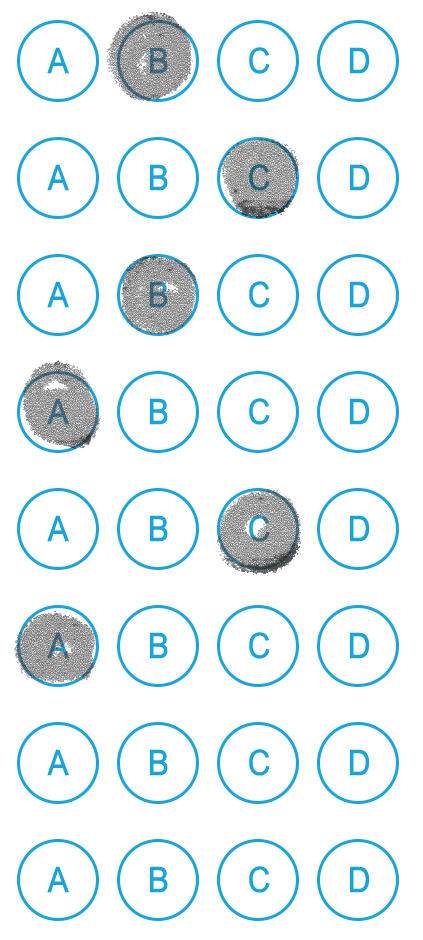
In America, we use the standard letters A, B, C, D, and F to define what a student has learned, but does this feedback really help us improve? Those five letters lie at the end of every class a student takes in their academic journey. Yet there are more ways to evaluate students—one of these methods being student-teacher conferences. In addressing grading systems, we need to understand which systems students and teachers feel the most comfortable with as well as which are the most helpful in the long-run.
The personal opinions of students and teachers are essential and must be where the solution to evaluating students is found. Hilda Lopez Martinez ‘29 states that “Grades stress students out too much” and that in “the real world, you don’t really need them as much as they say.” On the other hand, Religious Studies Teacher Mr. Brian Lorentz says, “Grades are a snapshot, a glimpse” into student’s understanding of content and “give a sense of where they really are.” Grades thus document growth and evaluate students over a certain unit—but are they the best way to promote improvement?
Student-teacher conferences act as an alternate system of evaluation. Mr. Thomas Donohoe, Computer Science and Math Teacher, described how the system worked, saying, “During the semester students would do their assessments, and they would not get a single letter grade. They would not get number grades. They would only be getting comments and feedback about the work that they’re doing.” Student-teacher conferences support growth—finding faulty areas and problems the student should work on. They also act as a way for educators to communicate in a more clear and personal way, which leads to the building of relationships between students and teachers. Hilda Lopez Martinez ‘29 supports the idea of student-teacher conferences, saying that for her, it would be “more helpful and [tell] me what I need to work on.”
According to Mr. Jorge Reyes, Assistant Principal of Curriculum and Academics and Math Teacher, “student-parent-teacher conferences would be the best way to give feedback about how learning is happening and not happening. And then second would be narrative. And then third would be grades.”
Bringing all of these considerations together, student-teacher conferences seem like the most accommodating and effective system to measure students progress. They’re a lot more meaningful than just slapping a letter grade on a paper. Further, letters or percentages on assignments alone don’t necessarily help students gain an understanding of what they firmly know and what areas they come short in. While there are many ways to evaluate students, the way students retain information on how to improve is from student-teacher conferences.