
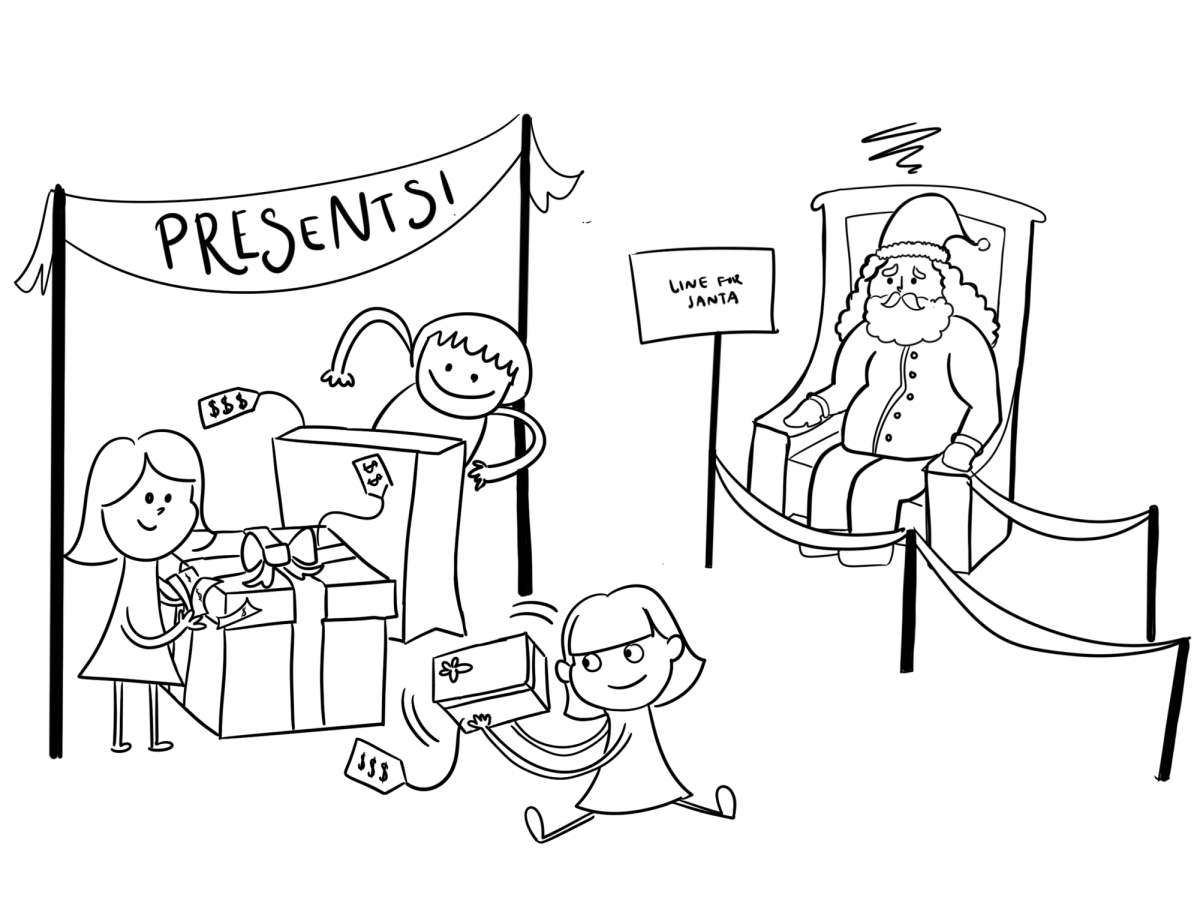
When did holiday cheer start coming with a price tag? Holiday spending in the United States has climbed to record highs, signaling a shift in how we celebrate the season. In 2023, Americans spent over $950 billion on retail sales during the holiday season. This year, Visa predicted that US consumers will each spend an average of $736 on holiday gifts. This is an increase of 10% compared to the $669 in 2024. The holidays used to be about love, family, faith, and happiness, but at some point, they became shrouded by consumerism.
On social media platforms such as TikTok, it is common to see kids creating slide shows with images, prices, and links to everything they want and doing hauls of everything they got. The videos teach younger audiences that the holidays are about what gifts you receive. Caroline Craig ‘27 said, “I noticed my seventh-grade sister building a slideshow with different links, categories, and pictures, all with a high price tag.”
The holidays have become a question of how long we can make our lists. What gifts do we want the most? With the rise of consumerism, the holidays have become more about receiving gifts than a true, deeper connection that supersedes material possessions and illuminates love and joy.
Whether a person celebrates Christmas, Hanukkah, Kwanza, or even just winter break, the heart of the holidays used to be about fostering connection and joy with loved ones. Religion teacher Dr. Rachel Bundang said the meaning of the holidays is “being present to people in a particular and personal way that can be meaningful.” Families used to gather around the table, share stories, and reflect on the year that had passed. In today’s world, that warm and cheerful spirit of the holidays has vanished, buried under piles of receipts, packages, and plastic decorations. In a survey of 2,000 Americans, 54% said that they dreaded the holidays because of their financial requirements. Caroline Christensen ‘27 said, “I think it’s important to spend time with family and not sacrifice family to go shopping.”
For many, the holidays are a time of faith. For example, Christmas is a time to celebrate Christ and rejoice in faith. Religious or not, the values of faith surrounding the holidays are good reminders of what we should be focusing on. Craig said, “Being catholic, I have always been taught the meaning of Christmas has been to serve others and rejoice in creation.” This is an important message for people, even if they don’t celebrate the holidays religiously. At their core, the holidays are meant to bring people together. It’s a time to slow down, reconnect, and be present with the people who matter most. That sense of connection is what strengthens relationships, encourages gratitude, and creates memories that outlast any gift.
The detriments of holiday consumerism go beyond a false focus on material aspects, the environmental impact is staggering. Gifts traditionally require wrapping paper, ribbons, and packaging materials. Roughly 25% more waste, 5 million extra tons of trash, is discarded by American households during the holidays. The glitter, dyes, and plastic coatings make much of this waste impossible to recycle. It often ends up in landfills or pollutes airways, adding to the problem of climate change. The waste from the holidays leaves a trail of environmental damage that lasts long after decorations come down.
The idea of gift-giving is a good one, but we need to focus on the giving aspect, not the receiving. Gifts have become the holidays themselves. It is common now for people to make lists with links to all the things they want. Christensen said, “now there’s a lot of lists with a ton of links.” Apps such as GoWish are especially popular as they offer a platform specifically for designing and sharing wishlists. In one month of this holiday season, they received 2.3 million new wishlists, with a total of 24 million wishes. These online lists eliminate the thought and intentionality that make gift-giving meaningful. Dr. B said, “It’s fine to want things, but maybe don’t expect them.” The focus needs to be put on carefully curating gifts tailored to the likes of the people we care about.
It is not that gift-giving needs to be abandoned altogether, but that a balance needs to be found that keeps the meaning of the holidays centered around love and family. The act of giving can still be meaningful, but we have to realize that a heartfelt card means more than the sweater linked on a list. Practicing more sustainable ways of wrapping or reusing materials can help reduce environmental harm. Time and energy allocated to gifts should be redirected to the people you love and your community.
Service can be a really valuable way to get meaning out of the holidays. It is a privilege to receive gifts and have large meals surrounded by family, so it is really powerful to use that privilege to help those who are less fortunate. Dr. B said, “figure out what’s life-giving for you and your family and your community, and invest your time and your heart in that.” We should give in a way that reflects gratitude, love, and care for both people and our planet.
SHP is located in one of the richest zip codes in the world, making it especially easy to get swept up in the excitement of gifts. However, many families in our local community struggle to afford not only presents, but meals and stable places to celebrate the holidays. One in five Californians struggles with food insecurity. If we want to get back to the real meaning of the holidays, we must remember it is a season of giving. SHP students and families are provided with a unique opportunity to give back. Whether it is working at a local soup kitchen or participating in food and toy drives. SHP hosts an annual Thanksgiving food drive, which is just one example of the multitude of ways to give back to our community. By shifting our focus from getting to giving, we can make the season more meaningful for everyone.
When we stop measuring the holidays by what’s under the tree, we make space for meaningful connection. The holidays are not about a price tag, but instead about spending time with loved ones, feeling joy and gratitude, and giving back to the community. Holiday joy can’t be found in a shopping mall or an online cart. It’s found in laughter, shared meals, quiet moments, and genuine kindness.