
Editor’s Note: Chamath Palihapitiya is the father of the author.
California is home to around 200 of the world’s 3,500 billionaires, making it a hub of innovation and economic prosperity. The state’s proposed 2026 Billionaire Tax Act aims to impose a one-time 5% tax on individuals with a net worth exceeding $1 billion, with the goal of raising roughly $100 billion.
The issue represents an important part of the larger U.S. discussion about equity, private wealth, and the government’s responsibility to promote economic prosperity for all. On one side are those who believe the proposed tax would provide essential revenue for social programs. On the other are those who believe that the tax will create immense economic harm for California and that it could create a precedent for future wealth taxes.
The revenue would be used to offset federal funding cuts to programs like Medicaid, and give support to the education system and the fight against food insecurity. The initiative was introduced and is sponsored by Service Employees International Union-United Healthcare Workers West (SEIU-UHW). This tax will apply retroactively in 2026, with an included five-year payment plan for those who can’t provide all the money up front. The tax, if it collects the needed signatures, would be voted on in the 2026 California ballot. California Governor Gavin Newsom opposes the tax.
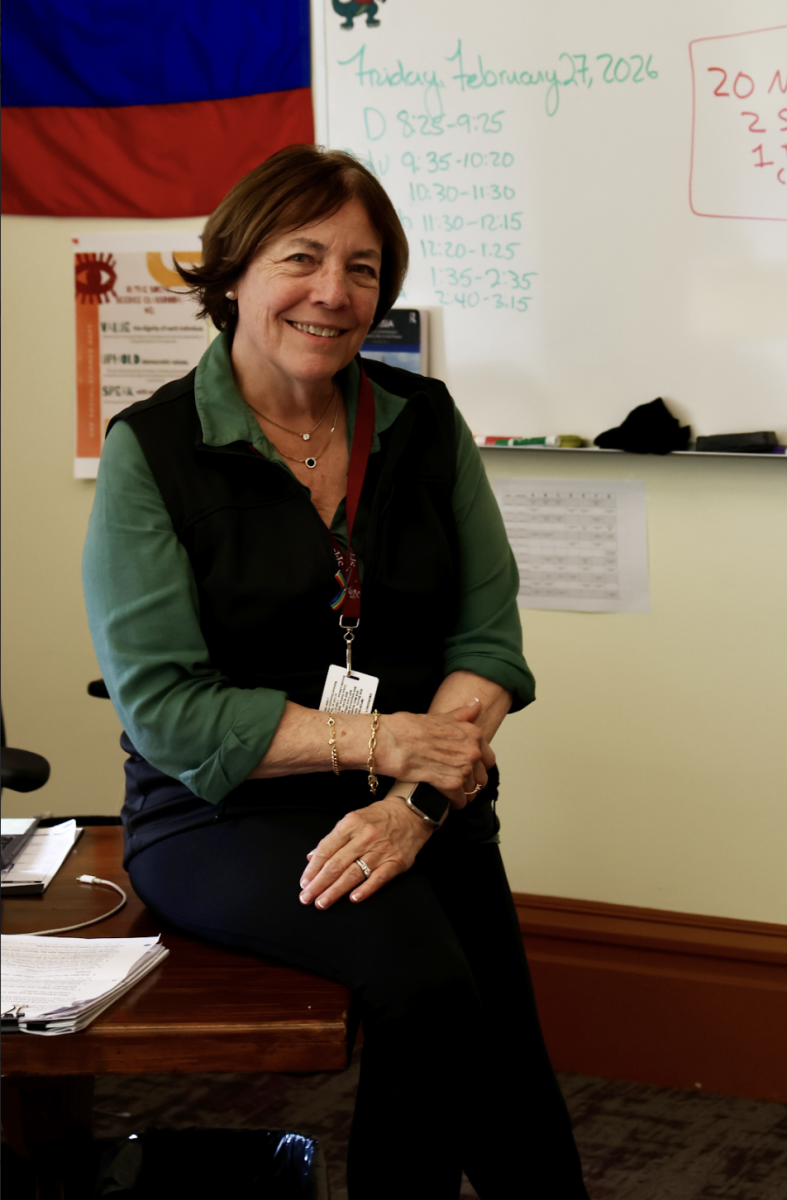
Many students, educators, economists and investors are aware and hold opinions on California’s proposed 2026 Billionaire Tax Act. SHP Economics teacher, Mr. Steven Saltzgaber, stated that he is “not surprised at all” by the proposal, explaining that “wealth inequality in this country is getting worse” and that people are getting frustrated. Saltz said that when people see figures like Jeff Bezos “effectively rent the city of Venice for his wedding, something like a wealth tax was bound to come up.”
Harvard University Associate Professor of Education with a Wharton degree in economics, Peter Blair, stated that he is “active in X/Twitter and my feed has been buzzing with commentary on the wealth tax from academics and billionaires.” He described the Act as “ill-conceived” because it targets unrealized capital gains”—[the profits made from the sale of things such as stocks, art, and real estate. Blair stated that “a startup founder of a unicorn could face this tax even before an IPO,” an[initial public offering], potentially discouraging entrepreneurs from establishing themselves in California.
Although Saltz believes that the wealthy should be taxed, stating that “Taxes are the cost of civilized society” and that “wealthy profit off the stability and safety that the U.S. system of government provides,” he expressed concern regarding the implementation of the tax. Saltz stated, “My biggest concern isn’t the idea of the tax itself, but how you actually implement it.” He questioned how the state will tax the wealth that has “not realized valued subjectively.”
Venture capitalist Chamath Palihapitiya expressed similar concerns about implementation, stating, “This tax is concerning on many levels” and is “an asset tax versus an income tax” that contains “arbitrary rules” that can tax founders based on voting rights and not actual ownership. Palihapitiya claimed that if the tax were to pass, it would “single-handedly drive many startup companies out of the state,” which could result in reduced state revenues, and ultimately increase taxes on the middle-class.
Jaiden Ghumman ‘26 generally agreed with Blair and Palihapitiya, stating that the tax would “hurt Silicon Valley’s reputation as a hub of innovation and lead to job losses, ultimately harming workers and students more than billionaires.” Saltz dismissed the fear of economic collapse as “fear-mongering,” stating that “Silicon Valley has enough talent, value, and opportunity that it won’t collapse just because a few self-serving billionaires threaten to leave.”
On the issue of revenue distribution, Ghumman stated that he believed the funds generated by the tax should be spent on “healthcare and education,” both of which he sees as critical to helping low-income families improve their financial well-being. Taking a different stance, Palihapitiya suggested that the problems of “waste, fraud and abuse of tax dollars” should be focused on before even the mention of more taxes, let alone the distribution of them.
The views of the interviewees on the tax are consistent in their views on voter behavior as well. Palihapitiya stated that many people will vote for the measure as a “proxy for their broader frustrations.” Those frustrations include “views on income inequality and their belief in whether rich people pay enough tax.” He reiterated that we must focus on creating “accountability on the tax dollars we provide the government” rather than taking such measures. Saltz had similar opinions on voter behavior, stating that voters are often “bombarded with TV commercials that are often deceptive” which will cause too many votes to be “knee-jerk reactions” to these ads.
Blair took a different stance. He believes that it is up to the billionaire’s discretion if this measure passes or not. He stated that “if [billionaires] can successfully convince voters that this policy isn’t only bad for wealthy individuals but will have negative repercussions for all Californians,” many people would vote no.
As the Billionaire Tax Act makes its way to a potential spot on the ballot for the 2026 election, Californians are forced to weigh the immediacy of their current public needs with the long term economic implications of this new tax act. This new tax measure raises tough questions regarding how the value of wealth is determined, how it is to be taxed, and if this policy creates an environment of accountability or contributes to the migration of assets out of California.
The Billionaire Tax Act demonstrates a growing demand from the public to take action to alleviate inequality in meaningful ways. Ultimately, it will be up to the voters to determine if this is a viable, sustainable solution or a move that has the potential to dramatically alter the course of California’s economy in major ways.