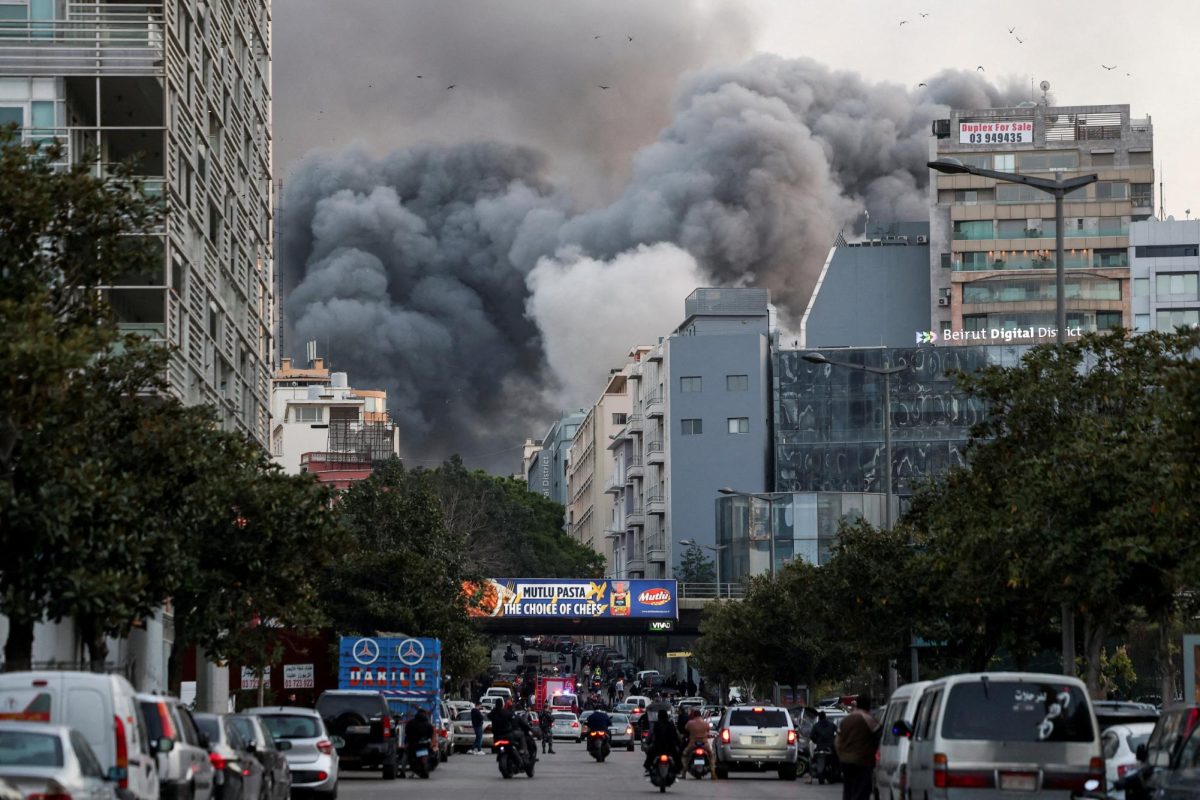
A narrow waterway 8,000 miles away from us is currently deciding the cost of your lunch, the cost of your commute, and the stability of your career.
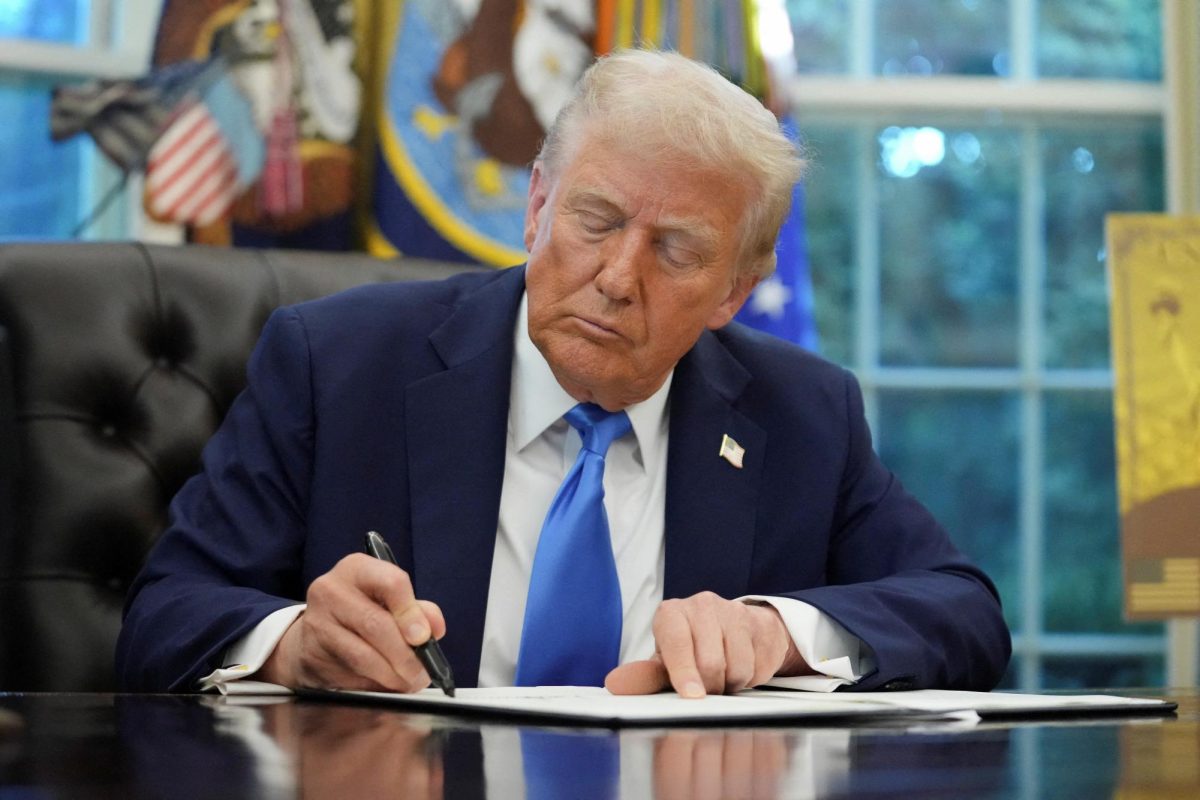
Since the outbreak of the U.S.-Iran conflict on February 28, 2026, the American public has experienced rising gas prices. What President Trump has characterized as a “little excursion” of the military will have lasting ramifications on the global economy. From the “highway” of the Strait of Hormuz to the grocery aisles of Middle America, the true cost of this conflict is only just beginning to surface.
On paper, the United States is an energy powerhouse; a net exporter pumping crude oil at high levels. This leads to a false sense of security. As economics teacher Mr. Steven Saltzgaber points out, “[the conflict] doesn’t impact the United States so much directly because we’re just pumping oil like crazy. We are a net exporter. So, you know, the initial inclination might be that it’s a good thing for us, but it’s not.” Domestic supply doesn’t insulate us from global panic. Despite our production, the price of West Texas Intermediate crude oil (WTI), which parallels Brent Crude prices, continues to climb. This is a phenomenon Saltzgaber argues we “really shouldn’t see” if markets were rational.
Instead, the market is reacting to the situation of the Strait of Hormuz, a narrow waterway handling 20% of the world’s oil supply — approximately 20 million barrels per day. Currently, oil shippers are keeping vessels at anchor for fear of Iranian attacks, triggering what Rapidan Energy — an independent consultancy that analyzes energy markets, policy, and more — calls the “biggest supply disruption in the history of the oil industry.”
The severity of the situation was punctuated last Wednesday when the International Energy Agency (IEA) took action. The IEA is an autonomous intergovernmental organization consisting of 32 member countries, established in 1974 to ensure reliable, affordable, and clean energy. Faith Birol, the IEA Executive Director, plainly stated that “the situation in global oil and gas markets [has] been significantly affected by the conflict in the Middle East.” In response, the IEA’s member countries agreed to the largest emergency intervention in the organization’s 52-year history.
“I can now announce that IEA countries have unanimously decided to launch the largest-ever release of emergency oil stocks in our agency’s history,” Birol said. The move involves releasing 400 million barrels of oil to address the supply gap. While IEA members hold over 1.2 billion barrels in public reserves, Saltz warns that this “is not necessarily going to fix the problem of higher oil prices right now.”
The psychological toll is already visible in data. As of March 12, CNN’s Fear and Greed Index sits at 21/100, resting in the “extreme fear” zone. CNN describes the Fear and Greed index as “a way to gauge stock market movements and whether stocks are fairly priced. The theory is based on the logic that excessive fear tends to drive down share prices, and too much greed tends to have the opposite effect.”
This volatility is fueled by a chaotic environment where, as Saltz puts it, “words move markets.” Consider the past two weeks. Most notably, on Monday, March 12, Secretary of Energy Chris Wright wrongly claimed on X that the Navy had successfully escorted a tanker through the Strait. Oil prices plummeted 17% instantly, only to climb back up when the post was deleted. Additionally, markets and buyers are struggling to parse the administration’s stance, oscillating between Trump’s threats of “death, fire, and fury” and his “little excursion” comments. Saltz notes that “when [Trump] feels vulnerable, he uses words to try to move things back in the other direction.” However, that raises the question: How much of Trump’s policy is being dictated by the markets? And how much of the markets respond to Trump’s comments?
This feedback loop suggests that our economic future isn’t being guided by a steady hand, but by a series of reactive pivots guiding the market in their trail. In an environment where a single deleted post can swing prices by 17%, the administration’s comments are no longer just a distraction – it is a detonator.
The conflict has forced a readjustment in U.S. policy. To keep global markets from seizing, the administration has begun relaxing restrictions on Russian oil exports, a move Saltz describes as “counterintuitive to our policy [with] Ukraine.” As well as being “counterintuitive to our trade policy” as a whole.
The most ‘under the radar’ consequence of the blockade isn’t oil, it is the ripple effect it will have on practically every industry — especially fertilizer. The Strait of Hormuz serves as an “incredible highway,” according to Saltz, for fertilizer. As the conflict drags on, the price of fertilizer is “exploding higher.” Saltz said “as the price of fertilizer explodes higher, it’s going to have an impact on food prices down the road.” Rising fertilizer costs lead to higher production costs for farmers. “For producers, if the price of our inputs goes up significantly, then [the] profit margins for producers get squeezed… and they’ll cut production,” Saltz said “And when they cut production, it results in higher prices, which only exacerbates the inflation pressure, but also cuts output. And that’s going to threaten jobs directly.”
When factories and farms cut production to save money on inflated fuel and fertilizer costs, two things happen:
- Supply drops: This makes prices for the remaining goods go even higher, a cycle Saltz says “only exacerbates the inflation pressure.”
- Jobs disappear: You cannot cut production without cutting workers. This “threatens jobs directly,” and a country without a steady paycheck is a country that stops spending.
American consumer spending makes up nearly 70% of the U.S. economy. When gas hits $5.35 and food prices follow, consumers will have to spend more on these goods, reducing the disposable income consumers can spend on other goods and services.
Saltz questions whether Wall Street and Main Street can “assume [US] stability after a situation like this?… This thing isn’t going to go away.” This “adventurism,” as he calls it, bodes poorly for inflation and even worse for job security.
With CNN’s Fear and Greed Index bottoming out at 21/100, Crude Oil Prices skyrocketing to almost $100 again, a message from the markets suggest that the “little excursion” has already cost us our stability. If the current trajectory holds, the $5.35 gas price won’t just be a high cost – it can be the pin that has the potential to pop the American economic bubble.