Kurt Vonnegut is probably not the first person most people think of when watching the news from Venezuela. That is precisely the problem.
Vonnegut, best known as a satirist of Cold War America, did not write novels meant to stay safely inside English classrooms. He wrote warnings — comic, unsettling warnings — about how power disguises itself, how fear is manufactured, and how easily moral language can be used to excuse political failure. His 1963 novel “Cat’s Cradle” offers one of the clearest frameworks we have for realizing how governments construct enemies in order to govern without accountability. That framework, created so long ago, applies disturbingly well to the current political discourse surrounding Venezuela.
“Cat’s Cradle” takes place on the fictional island of San Lorenzo, a desperately poor nation whose government has made its own religion — Bokononism — illegal. Everyone practices it anyway. The ban is unenforced and largely ceremonial, made tangible only through the threat of being killed on a large fishhook that looms over the island. Its purpose is not to protect citizens from danger, but to create a new one — one that galvanizes them under the control of San Lorenzo’s leader. By outlawing a harmless belief system, the government gives itself a permanent threat to point to, a way to unify citizens through shared anxiety, and a convenient explanation for its inability to deliver prosperity, stability, or justice. Vonnegut’s genius lies in his refusal to treat this as an exception. The outlawing of Bokononism is not the result of fanaticism or incompetence; it is rational within a political system that values control over truth. Fear does the governing, so that leaders do not have to.
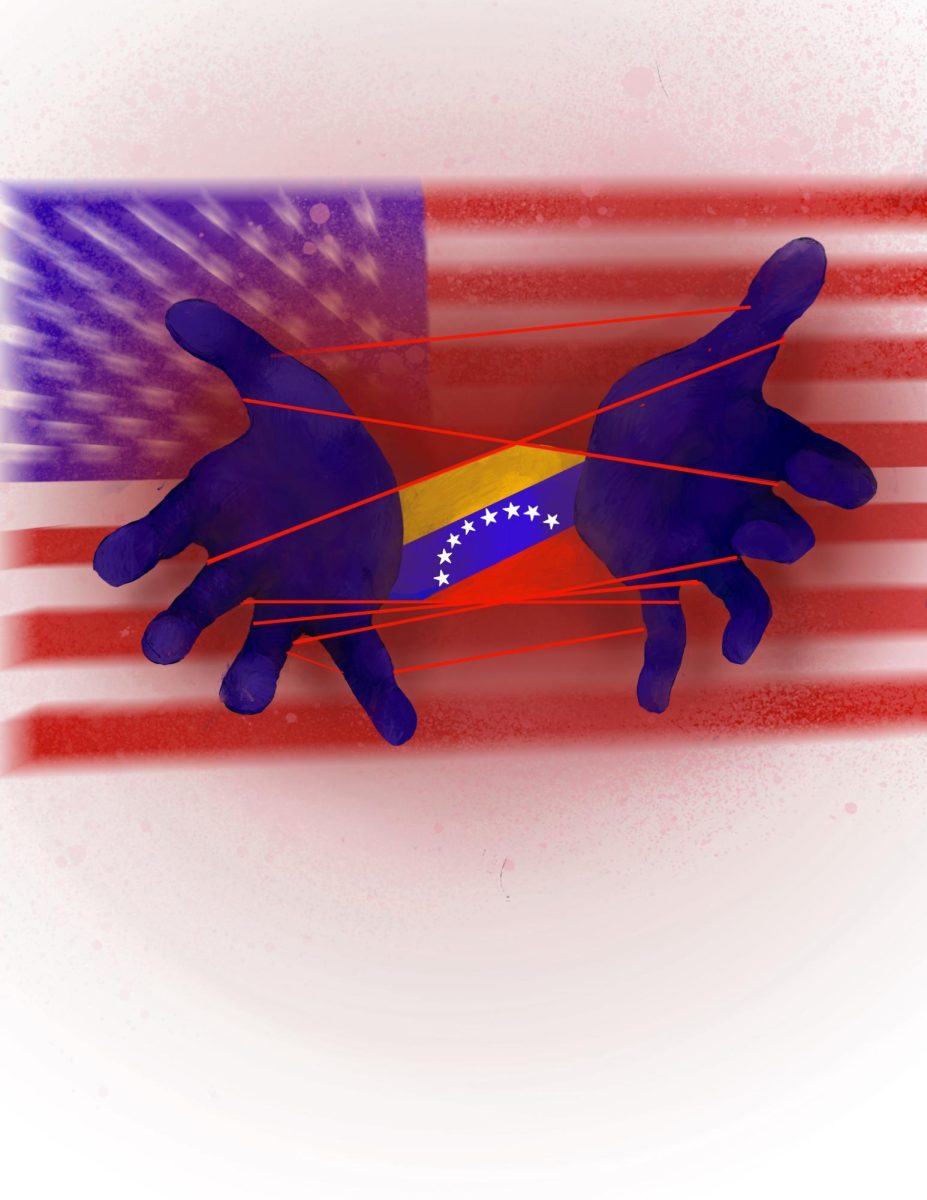
This is the lesson we should be carrying with us when we look at how Venezuela is being discussed. In recent months, Venezuela has once again been framed as a singular external menace: a failed state, a criminal regime, a threat to democracy and regional order. These claims are not entirely invented. The Venezuelan government has committed serious abuses, presided over economic collapse, and repressed political opposition. But Vonnegut teaches us that accuracy alone does not make a narrative honest or beneficial to its subjects. What matters is how that narrative functions.
When Venezuela is presented as a moral emergency demanding extraordinary, heroic measures to be resolved, it becomes more than a geopolitical affair — it becomes a symbol. The language surrounding US actions is almost ritualistic: restoring democracy, defending security, maintaining order. The language simplifies a complex political reality into a story with clear villains and implied heroes, leaving little room for questions about unintended consequences, geopolitical self-interest, or the actual outcomes for Venezuelan civilians.
In “Cat’s Cradle,” the state does not need Bokononism to be dangerous; it needs Bokononism to exist as a threat. Similarly, the situation in Venezuela does not need to be understood in all its complexity to serve its role in foreign policy rhetoric. It only needs to be frightening enough, dysfunctional enough, morally compromised enough to justify intervention, and perhaps even deflect attention from deeper failures.
Vonnegut had a word for this kind of storytelling: foma, or harmless untruths. But the irony of political foma is that it is rarely harmless. When governments rely on simplified moral narratives, real people pay the price. Ordinary citizens become collateral damage in a story told for someone else’s benefit.
The urgency of Vonnegut’s lesson is that we are not meant to consume political narratives passively. “Cat’s Cradle” is not merely satire; it is instruction. It trains readers to notice when legality becomes theatrical, when fear replaces governance, and when moral language is used to obscure rather than illuminate. Vonnegut does not argue that governments should never act or that power is inherently illegitimate. He argues that power demands skepticism.
The danger, as “Cat’s Cradle” makes clear, is not that people believe lies. It is that they stop asking why certain stories are told, who tells them, and who benefits from their repetition. Vonnegut’s characters live in a world where everyone knows the rules are absurd, yet they continue to operate within them because no alternative narrative has been made visible.
We are not obligated to make the same mistake.
Reading Vonnegut in the context of current events in Venezuela is not an academic exercise; it is a civic one. His work reminds us that critical thinking is not optional in moments of political instability and progress alike. If we fail to apply the lessons literature like “Cat’s Cradle” offers, we risk becoming fluent in the language of fear without ever questioning its purpose.
Vonnegut once wrote that “we are what we pretend to be.” If that is true, then the stories we accept do not merely describe the world. They create it.