Romcoms: the genre that once dominated the film industry, captivating audiences through idealistic portrayals of love. Adored for providing an escape from reality to a world of meet-cutes and happy endings, the romantic comedy once seemed timeless. Yet sometime in the past few years, the genre seems to have faded away. It seems to have waned slowly and quietly, suffocated by cliché plots, shallow storytelling, and an industry that values profit over depth.
But it wasn’t always this way. The 1990s and early 2000s gave us countless staples of the romcom genre. From “Sleepless in Seattle” and “10 Things I Hate About You” to “27 Dresses” and “13 Going on 30,” earlier decades contributed unforgettable and endlessly rewatchable classics. Recent romcoms, however, have been unable to match the authenticity and allure of their earlier counterparts. The movie industry as a whole is shifting its focus away from romcoms toward rising genres like horror. Fewer romcoms, and even fewer quality ones, are being produced.
When comparing U.S. domestic box office performance for romantic comedy movies in 2025 versus earlier years, the gap is undeniable. The total gross of all 2025 romcoms comes out to around $60 million, with the highest-grossing film, “Materialists,” estimated at around $36.5 million. By contrast, in 2008, the total gross of romcoms was over $766 million, with “The Proposal” bringing in around $164 million. But that wasn’t an anomaly: in the 2000s, the romantic comedies genre was consistently bringing in $500 to 700 million each year. In recent years, the genre has been unable to match this level of success.
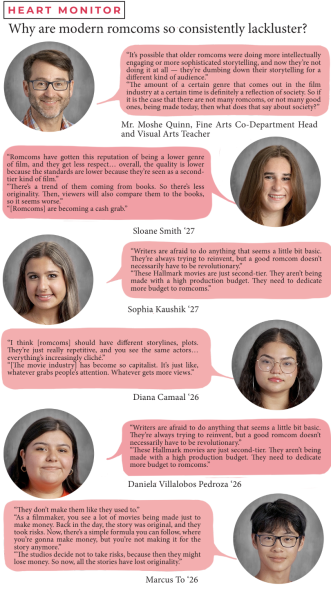
These statistics suggest that romcoms are losing their charm and popularity, but why? Why are modern romcoms so consistently lackluster? What about them is so disappointing? Is it because ideas are becoming increasingly cliché, and writers struggle to find new ways to surprise us? Is it because of the quality of the acting, or the sophistication of the storytelling? Is it because society is changing, and audiences are changing with it?