

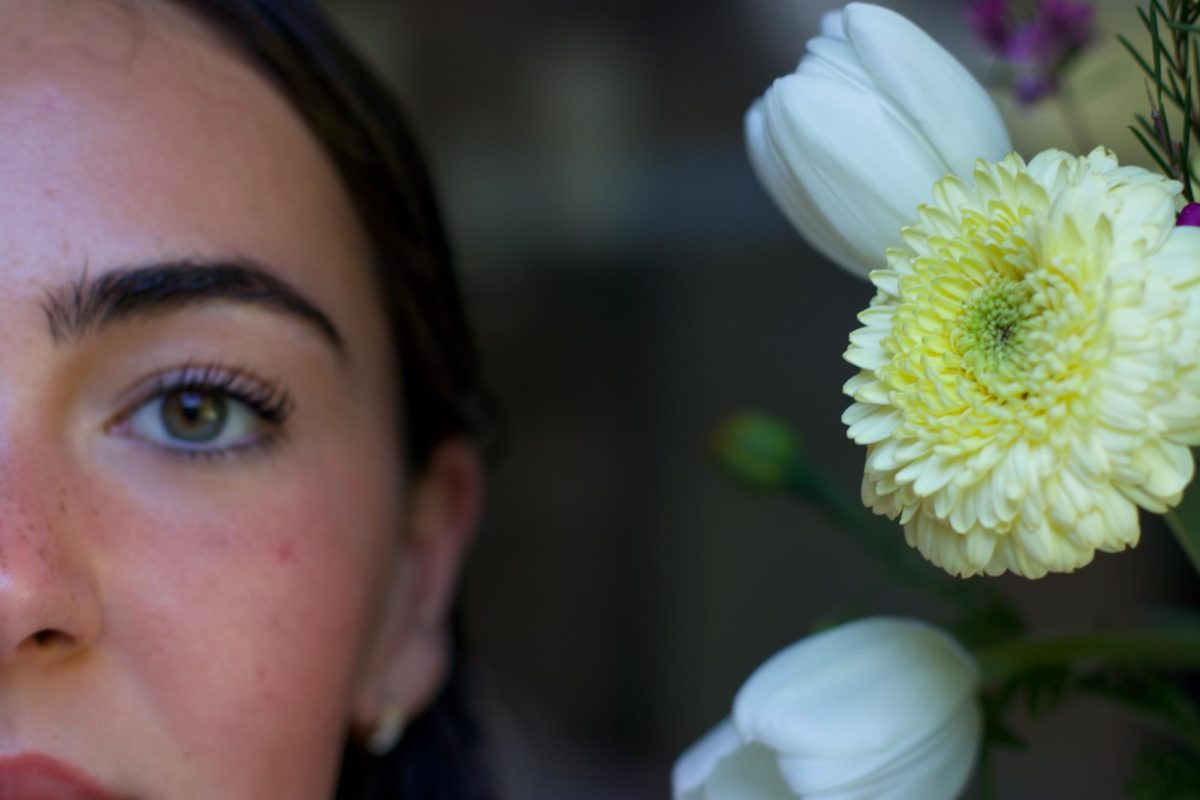
Since August, SHP’s AP art students have been working hard on their portfolios. These are curated collections of artwork, consisting of a Sustained Investigation centered around a specific theme (60%), and additional Selected Works (40%). Although their portfolios will be submitted to CollegeBoard in May, they are so much more than an assignment to be evaluated by an AP grader—they are a space for creative exploration and a reflection of their creators’ values and identities.
Among these art students are several standout female artists. Alexandra Krna ‘27 is an AP Photography student. Her Sustained Investigation is about California’s history of Native American assimilation through the mission system. As a Californian, and someone who is passionate about history, she felt that this theme was both relevant to her and something she wanted to learn more about.
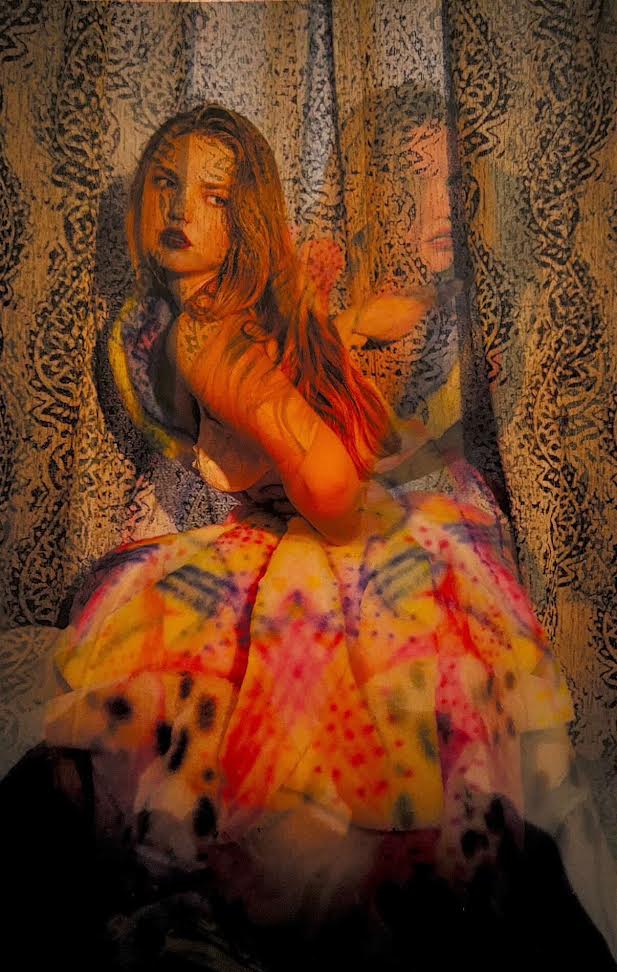
In addition to her Sustained Investigation, Krna engaged in a portraiture assignment, where she shot portraits of her younger sister and the nuns at Oakwood. She reflected that for every assignment she does, she “tries to have a coherent storyline and theme.” With these portrait rolls, she hoped to create a sense of contrast, and capture “the passage of time.” Krna’s portraiture of her sister was inspired by her “own experience transitioning into high school,” where she “remembers feeling insecure.” Ultimately, her goal was to convey the “dichotomy of emotions that come with girlhood,” while emphasizing the femininity and joy that prevails.

Krna’s work exemplifies the thought that goes into each piece of art that SHP’s artists produce. Each choice is deliberate and meaningful, informed by personal experiences, passions, and efforts to educate themselves on topics that matter.
Leigh Moeschler ‘26 took a different approach to her portfolio in AP 3-D Art and Design. For her Sustained Investigation, Moeschler chose to “focus on connecting with [her] childhood memories in California, through functional pieces with designs that reflect the landscapes.” Her pieces are each “everyday objects” that seem mundane at first glance, but infused with “details that show how you’re interacting with a memory.” Moeschler was inspired by her own “love for nature,” how her “most cherished childhood memories are centered around the natural world,” and how she “finds peace from being in nature—in creation.” Her art reflects her appreciation for beauty, and the deeply personal themes of many artists’ work.
Also in AP 3-D, Kaililauokekoa Bell ‘27 is creating a portfolio that “centers around the passage of time, and more specifically, how different pieces can express different moments in time.” She is inspired by the “things that were very significant to [her] growing up, and everything that’s now changing in [her] life.” One of her favorite pieces, and one of the first she planned, is an owl statue intended to signify the future. “Owls are often a symbol of uncertainty” as well as “change and self-protection in Hawaiian culture,” Bell said. As a result, “they represent how no one knows what’s going to happen or what’s coming.”
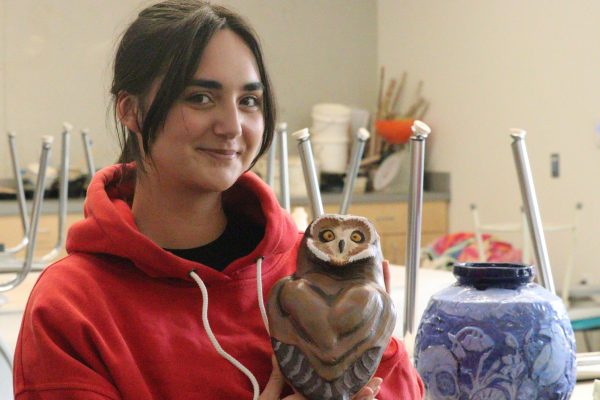
protection.
Another piece that Bell has completed is a ceramic vase, with the outside adorned by intricate natural imagery. This artwork was inspired by Bell’s consciousness that “the world might be very different in the future from an ecological standpoint.” The vase depicts a variety of different animal and plant species, but the notable part is that In Bell’s own words: “one side [spinning the vase is a physical representation of time passing.of the vase] has all native Californian species, and the more you turn it, the more the introduction of invasive species becomes apparent.” This highlights the uncertainty of the future for the natural world, and the dangers of human-induced disruptions to delicate ecosystems.
These two pieces are each a unique testament to Bell’s attention to detail and thoughtfulness. She goes beyond the surface, incorporating symbolism and interactive elements, making her art powerful and profound.
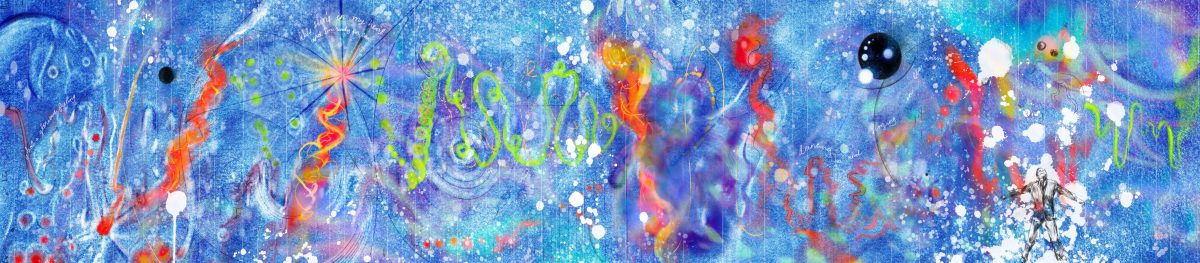
Evelyn Knestrick ‘26 is in AP 2-D Art and Design. She has always been drawn to the arts, and her work has grown with her over the years to reflect her personal style and identity. Knestrick is particularly fascinated by the genre of abstraction, which “relies on the change of form from the typical.” In her creative process, Knestrick often follows her instinct and urges, “creating art quickly and not waiting for the perfect idea.” Once her art begins to take shape, she then “looks inward and questions [her] instinctual creation.” Knestrick shared that this combination of intuition and reflection is key and “grounds her art in who [she] is and how [she] sees the world.”
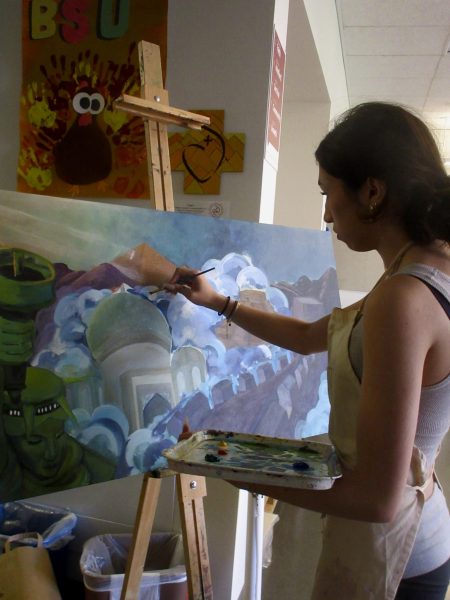
For her Sustained Investigation, Knestrick chose the theme of solitude, inspired by her own introverted nature. In her portfolio, she explores her “own relationship with solitude,” how she can find it “comforting but also lonely.” One of her pieces is titled Cinderella, conveying “isolation as a symbol of status, with the castle depicting an unreachable fantasy.” Knestrick contrasts fantasy and reality through “classic fairytale imagery alongside a dense urban setting,” highlighting the duality of solitude.
“I love art because when words fail me, I can always express what is left unsaid on the canvas in front of me… something that exists without a need for explanation,” Knestrick said. Knestrick embodies the heart that so many SHP artists put into their work, and the power of art as a medium for self-discovery and expression.
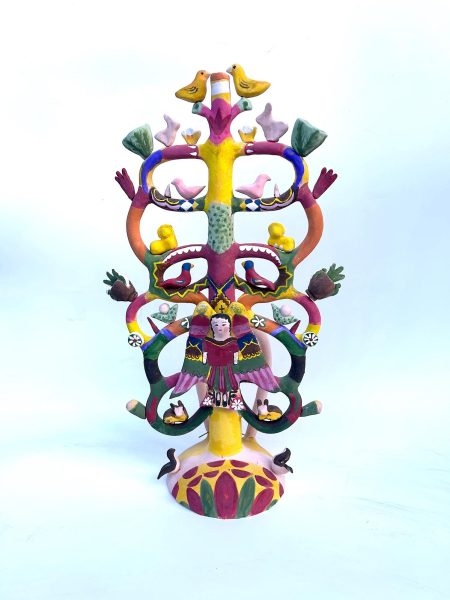
Lastly, Poema Ueligitone ‘26 is exploring her cultural heritage through her portfolio in AP 3-D. She has been working to “create pieces that reflect the effects of colonization on Polynesia.” For instance, one piece is a storyboard pot with a drape of fabric, which represents “the first presence of violence and colonization in the Polynesian islands.” The piece includes a woman standing atop an island, while a ship and white soldier approach. The woman symbolizes “the strength and pride of Polynesia,” while the soldier personifies “a new modern world and the unknown.” The interactions between the two sides convey a “power dynamic,” as well as the values that each side holds. The drape also carries deep meaning: it mimics water flowing from the pot, representing shifting cultural influences as authentic Polynesian culture floods out and European influence floods in.
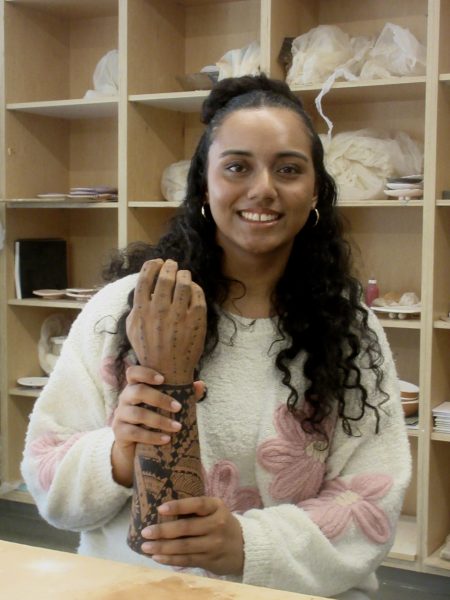
arm, detailed with traditional Samoan tattoos.
A second piece, Ueligitone’s “arm covered in traditional Samoan tattoos,” conveys similar themes. The arm is made to look like someone calling for help, submerged in water, spotlighting the “drowning of Polynesian culture and the dilution of rich traditions.” Ultimately, across her pieces, Ueligitone wished to “bring to light [her] own Polynesian culture,” and communicate the message that “although a lot of traditional customs have been tainted, the impact and culture of the Pacific Islander people are still present in modern society today.”
Ueligitone’s work expresses not just her personal values, heritage, and identity, but broader themes she wishes to impart to her audience. Her art uplifts underappreciated members of society, as she uses her creative voice to advocate for recognition.
These are just a few of the many valuable artistic contributions on campus. Each SHP artist deserves their own spotlight for their work, as they invest significant time, engage in deep self-reflection, incorporate complex design choices, and most of all, share their passion. Let us celebrate these voices, as they continue creating meaningful pieces and refining their craft.
![Artist Spotlight: Matthew Koo '26 [Nationally Recognized Violinist to play at Carnegie Hall]](https://shpmedia.org/wp-content/uploads/2024/04/IMG_6859-800x1200.jpg)