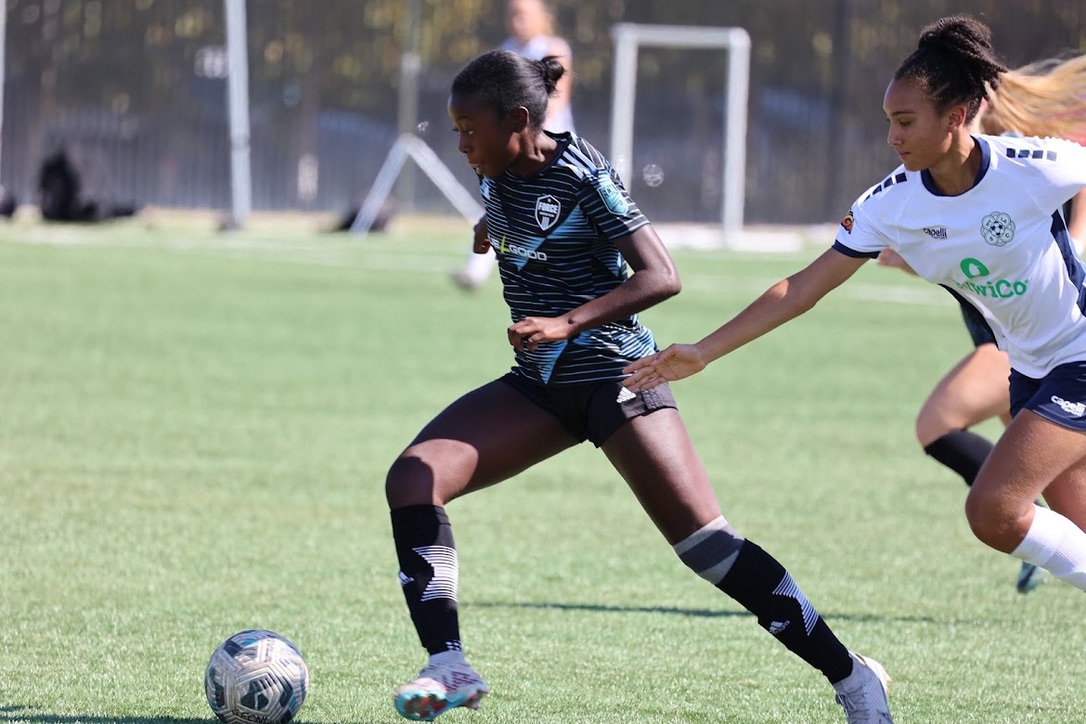
Sacred Heart is known for its powerhouse water polo and lacrosse programs, consistently producing numerous DI and DIII athletes year after year. What may sometimes go unnoticed, however, are the high-level competitors within some of SHP’s other programs, including soccer. This year, two gators have reached milestones that reflect not only talent but also resilience. From coaching changes to injuries to the uncertainty that comes with recruitment, each of their paths has been anything but linear. Through perseverance and a deep love for the game, both have earned the opportunity to continue their soccer careers at the collegiate level. Their stories highlight some of the core values of SHP athletics: commitment, adaptability, and the kind determination that turns long-term goals into reality. Below are the stories of these two gators who are ready to take on the next stages of their soccer careers.
Calder Zirn ‘26: Stanford University
Soccer has been a constant in Zirn’s life for as long as he can remember, which is why he’s wanted to compete at the collegiate level since his freshman year of high school. He grew up surrounded by various sports. His dad put him into soccer at only three years old to tap into his German roots, and he tried baseball, basketball, and even tennis, much to his mom’s delight, as she always emphasized trying all kinds of sports.
When he reached middle school, Zirn started playing up a year in soccer and realized that he “enjoyed playing it more” than tennis, which had become his other main sport. Zirn recalls “enjoy[ing] the challenge” that playing a year up presented him with, and ultimately decided to focus on soccer from that point forward.
When high school began, Zirn reflected on the endless hours and effort he had already poured into soccer and decided that it was only right that he “made playing in college a reality.” He admits that consistency was initially a struggle, and coaches who expressed an interest in him often came back saying they “needed to see a little more,” which prolonged an already lengthy recruitment process that generally takes longer for boys’ soccer.
This past September, Zirn came very close to committing to Dartmouth College, but was unfortunately stripped of that opportunity when the entire coaching staff was fired in the midst of his communication with them. Undeterred, Zirn continued to train, compete, and put himself in front of coaches, eventually receiving an offer from Cornell University in December after a big MLS Next tournament, a big tournament for the top youth soccer league in the country that features elite academy players and is heavily scouted by college coaches. At the time, he was also weighing the possibility of reclassing or taking the gap year option, as Stanford had told him that there was a spot for him in the 2027 class.
Zirn ended up accepting the offer from Cornell, but the next day found out Stanford had unexpectedly opened a spot for him in the 2026 class, when they had previously only had one available to him in the 2027 class. This would have forced him to take the gap year route or potentially reclass. Zirn describes Stanford as “the best of both worlds,” a school known for being “the pinnacle of college soccer and academics.” In discussing his decision to decommit from Cornell and choose Stanford within the span of 24 hours, Zirn shared that Stanford has always been “a dream school” for him, but not one that he spoke about publicly for fear of never achieving it. He also appreciates the proximity to home, the California weather, and Stanford’s ability to compete seriously for national championships.
Once the athlete application portal was opened for him, everything was set in stone for Zirn just a week later. Now, the De Anza Force striker has high aspirations for his tenure at Stanford, aiming to win a national championship, a goal he deems to be “100% in the cards.” Looking back on his recruitment process, Zirn describes it as feeling “long and tedious,” full of moments where he “thought it wasn’t going to work out,” but ultimately says that it taught him to stay patient and resilient. “You can’t give up,” he explains, because “it’s all just a matter of when.” When he recognizes that it is not easy to stay patient, he firmly believes that if you put in the work, your time will come.
Marie Djacga ‘27: Harvard University
Starting soccer at three years old, Marie Djacga has long imagined herself competing at the collegiate level. With parents from Cameroon, a country where soccer holds deep cultural significance, and an older brother who played before her, the sport quickly became central to her identity. “I basically just did everything he did,” she said. What began as childhood imitation soon evolved into a clear goal. By middle school, Djacga knew she “couldn’t imagine [her] life without soccer” and decided she needed to “find a way to continue” playing in college.
Unlike many recruits whose journeys build steadily, Djacga’s process was shaped by injury and uncertainty. She entered the June 15 communication window having only been healthy for two months after recovering from her first knee injury. Nearly 25 to 30 schools reached out when they had the first opportunity to do so. Harvard, however, “kind of came out of nowhere.” She remembers receiving an email around “9 p.m. on June 14th when it was midnight for them,” a moment that made her realize “oh wow, this is serious.”
Shortly after a Harvard coach came to watch her play, Djacga was injured again. That setback forced her to have difficult conversations with many coaches. She had to personally call every interested program and explain that she would be out for nine months. “That’s when it really became clear for me,” she said. “I knew I had to go to the school that believed in me and wanted me the most.” While some programs hesitated, Harvard did not. “They were like, ‘Okay, you’re hurt, and we still want you 100 percent.” That is when she felt the legitimacy of their interest.
What stood out most was that only one Harvard coach had even seen her play extensively in person, yet he was fully convinced. Djacga recalls his mentality being “yeah, guys, we need this girl” regardless of injury.
Throughout the process, Djacga maintained perspective. She has always approached soccer with balance, reminding herself that “it’s school first, soccer second.” She prepared academically so that “if I could never play soccer again tomorrow, I could go to the school I wanted to go to.” While injury was not part of her plan, she admits she had “kind of always planned for the worst-case scenario,” which helped her stay grounded.
She committed within the first days of her junior year and later took her official visit over Labor Day weekend. Having already been on campus over the summer, the visit confirmed her earlier feelings.
Now, Djacga’s goals are clear. “I definitely want to win the Ivy League championship,” she said. After years of club soccer being overtaken by showcases rather than title competitions, she shared that she “really wants to be back competing for and winning a title.” She also hopes to serve as a junior captain, noting that Harvard traditionally selects one third-year player for that role. “I want that to be me,” she shared confidently.
Djacga played up an age group for much of her career and has trained with De Anza Force since elementary school. Her accomplishments include first-team honors at SHP, U.S. National Team camp participation, and multiple call-ups to train with Gotham FC, a renowned NWSL team based in New Jersey. Still, she credits SHP with helping her maintain joy in the sport. Playing high school soccer her freshman year reminded her that “it’s not just a business” and that at its core, “it’s what I love.”
Looking back on the recruiting process, Djacga acknowledges how unpredictable it felt. Yet through injuries, last-minute opportunities, and difficult conversations, she stayed patient. “It’s not just the school,” she reflected, “it’s the people. Which coaches will protect me and make me feel valued?”
For Djacga, the answer became clear. Harvard believed in her before she was fully healthy, before the process felt stable, and before anything was guaranteed. As she prepares for her next chapter, she carries with her the same mindset of resilience, perspective, and confidence.
Though their paths looked different, both Zirn and Djacga navigated uncertainty, setbacks, and shifting timelines with persistence. Their commitments reflect not just talent, but patience and belief in the process. As they prepare to represent Stanford and Harvard on the field, they leave behind a model for younger Gators chasing similar goals. Their journeys serve as reminders that recruitment is rarely simple, but with dedication, opportunities present themselves.