Walk into an AP classroom, and you can almost predict the scene: students scribbling on lined paper, completing practice free-response questions, while teachers help them revise their answers.
Walking into Homer 214 is a little different.
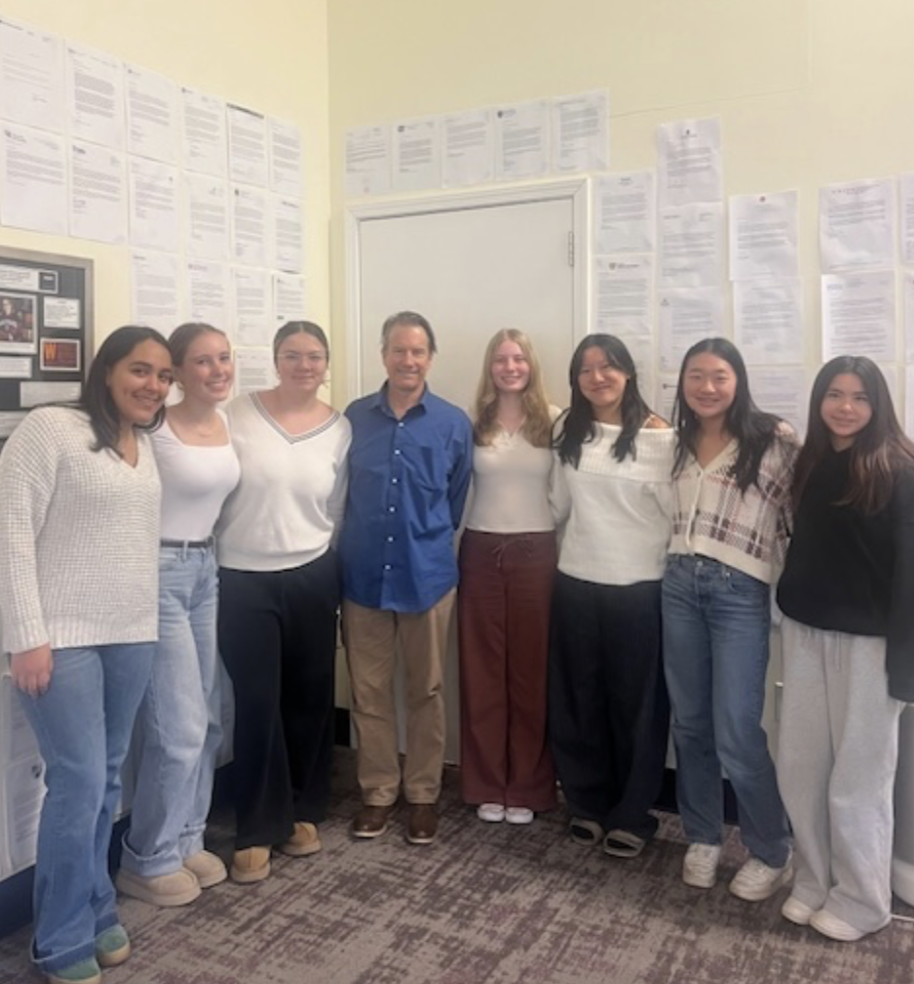
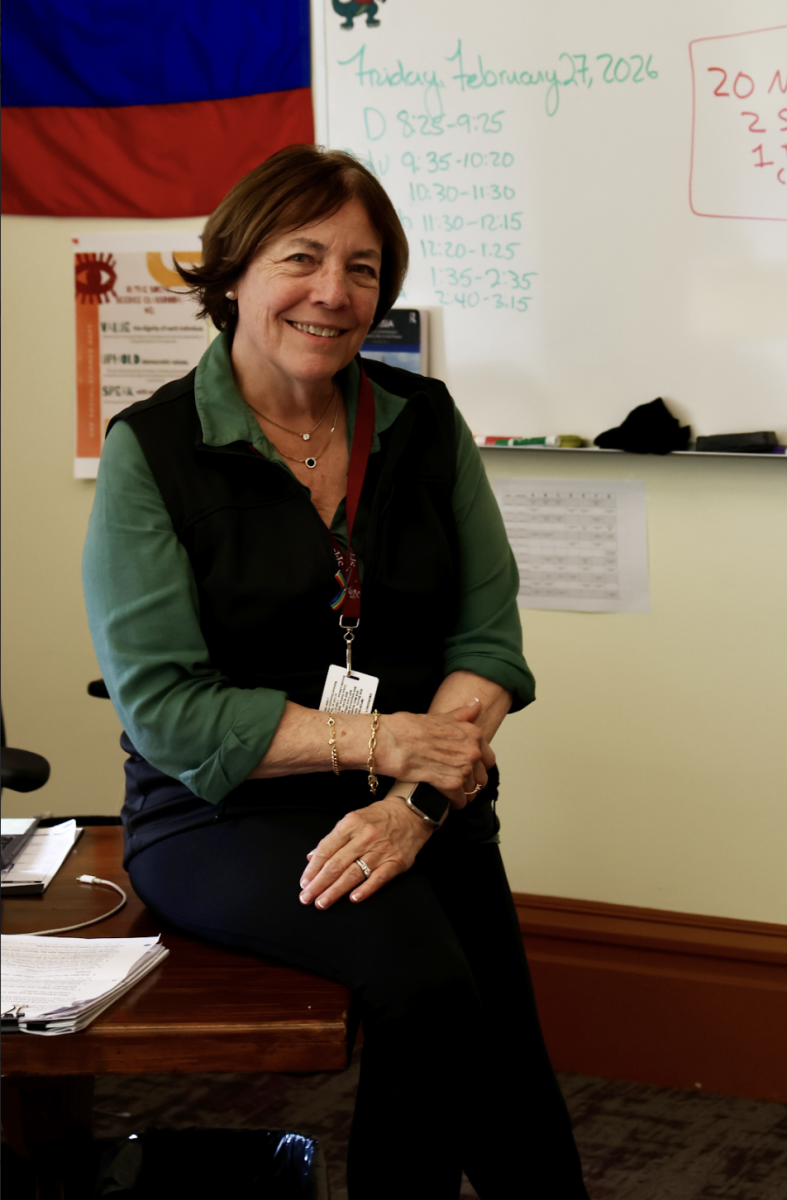
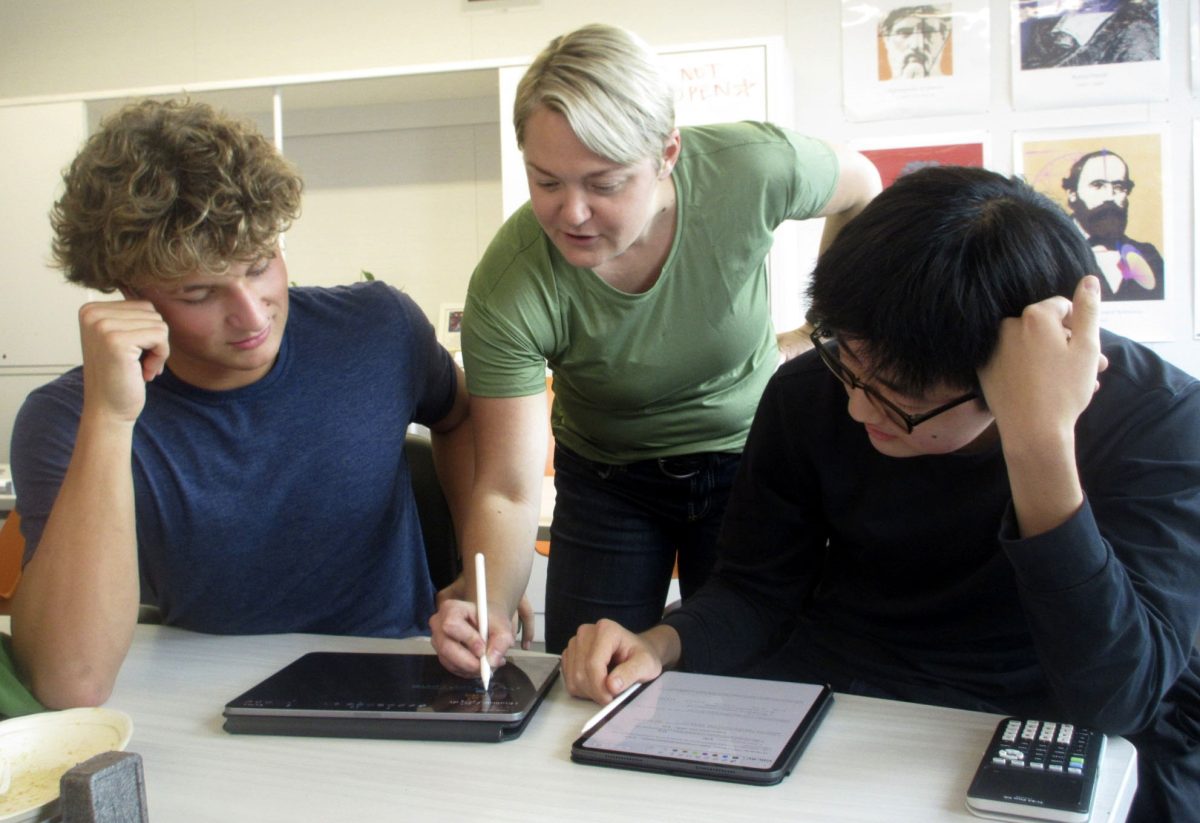
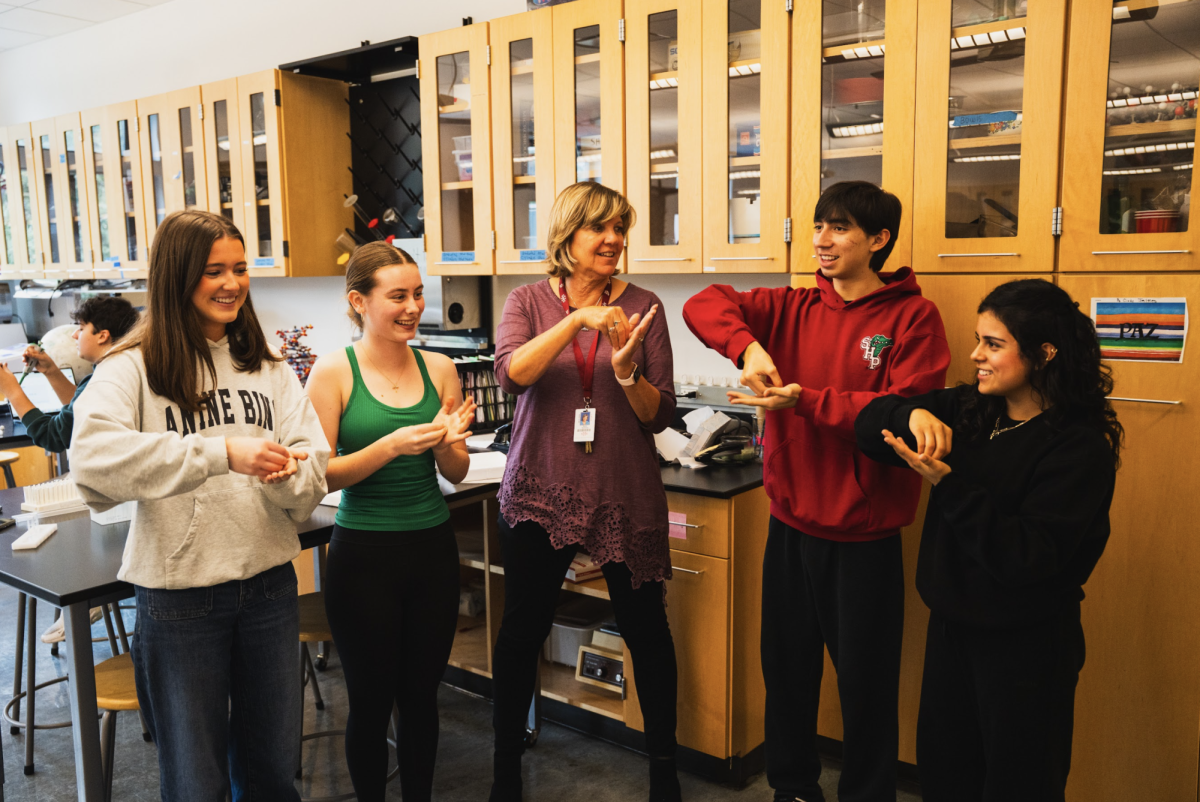
Ms. Diane Sweeney, or “Sweeney” as students affectionately refer to her, can be found passionately describing how a promoter becomes attractive to RNA polymerase as AP Biology students laugh, stretching ropes and wearing feathered tassels.
Sweeney has been teaching for over 35 years and has always grounded her teaching in sensory-based learning. Now, she is being asked to write “suggested approach” sections in the newest Teacher’s Guide to Campbell Biology, 13th Edition, the standard textbook for both college and AP-level biology classes. These sections, which will include hands-on activities and dispel common misconceptions, will aid teachers in grounding their teaching with the same activities Sweeney uses in her classes.
As a student, Sweeney “had a hard time learning complex things without fun ways to learn them.” Now, she hopes to give teachers “memorable ways to explain complex” topics “simply” so that their students can learn by engaging the senses. Through this approach, she finds that students, even a decade after her class, will remember her silly sayings and interactive classes, and, as a result, retain the concepts long after they take the course.
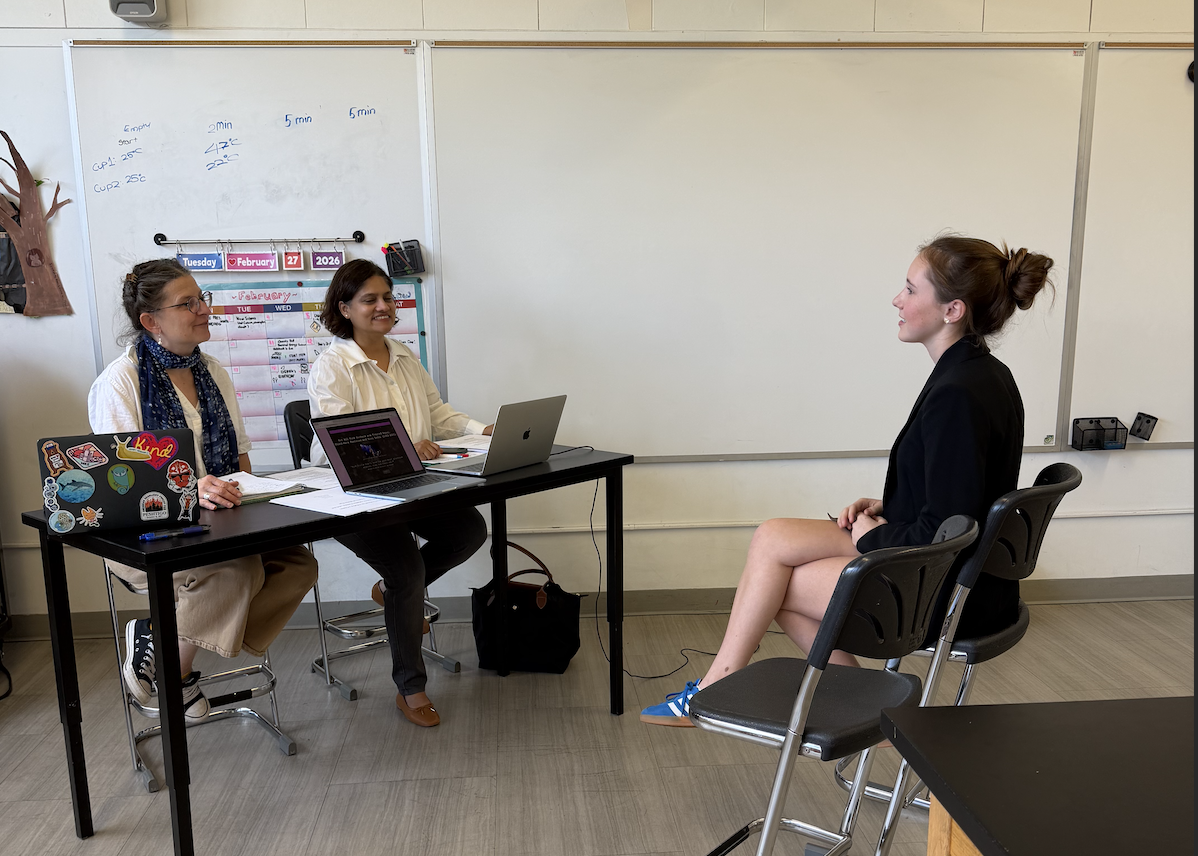
This sentiment was readily echoed by Alexa Wong ‘25, who still remembers her cellobiase final, which “as tough as it was to complete, focus[ed] on the application and practicality of skills.” Wong noted that the focus on applying knowledge to real-world situations is key to what many students say they gain from Sweeney’s class.
Rocco Vitale ‘26, part of Sweeney’s 2024-2025 class, found that her interactive classes taught him “how to think like a biologist,” simultaneously making it “easier to take complicated concepts and translate them” into activities students could connect to. Unlike other AP classes, which Vitale noted had a “more rigid curriculum,” Sweeney’s classes are based on topics that both “she and the students find interesting,” allowing students to be guided by curiosity, asking questions out of genuine interest.
Similarly, Saara Wallace ‘27, a current student, found that “interacting with Sweeney’s labs help[ed] her memorize” the concepts “on a long-term basis and understand material more deeply, rather than studying the material all in one night.” As students learned about different carbohydrates while making bread in the Hearth, they discovered that the best way to learn is by doing — an approach made easy by Sweeney’s labs, which makes the complex concepts fun and engaging. For visual learners like Wong and Emma Singel ‘27, Sweeney’s classes integrate lots of hands-on activities, helping them to comprehend the material fully.
While Sweeney joked about her lessons being “sticky-wicky” — the name of an activity about water properties — her goal is serious: she doesn’t want to “spend all [her] energy teaching and then have” the knowledge disappear. She “wants something lasting.” Her approach to teaching also changes how students view science itself.
Students noted that AP Bio felt fundamentally different from their other STEM classes. While in other classes students may be hesitant to ask questions, Vitale noted that “Sweeney encourages people to ask questions and be curious.” Sweeney made sure that students were “learn[ing] lessons and improving data accuracy from doing [experiments] wrong,” since making mistakes is the best way to learn, Wallace stated.
This mindset has wide-reaching effects. In labs like the multi-week cellobiase enzyme final, students design their own procedures and troubleshoot incorrect data. These are skills that build confidence in experimental design and foster critical thinking for future experiments. Vitale noted that the same project asked him not only to engage with and analyze scientific data, but also to consider how “molecular biology is tied to public policy and social implications,” connecting scientific findings to real-world contexts.
As she nears retirement, Sweeney hopes to leave the Campbell biology teaching guide behind as her legacy, sharing her knowledge and passion through the activities included in textbooks to teachers at both the AP and college levels. She sees this work as critical to shaping how students learn science, and she hopes the guide will inspire both students and teachers alike. Years from now, while students may forget the specifics of the Krebs cycle and insulin production, students will hopefully still remember acting out the functions of membrane proteins and pipetting solutions into vials, realizing that science is as much about memorizing concepts as it is about learning real-life skills. Through Sweeney’s contributions to the “teaching guide,” soon, students in classrooms far beyond SHP may remember those same lessons too.