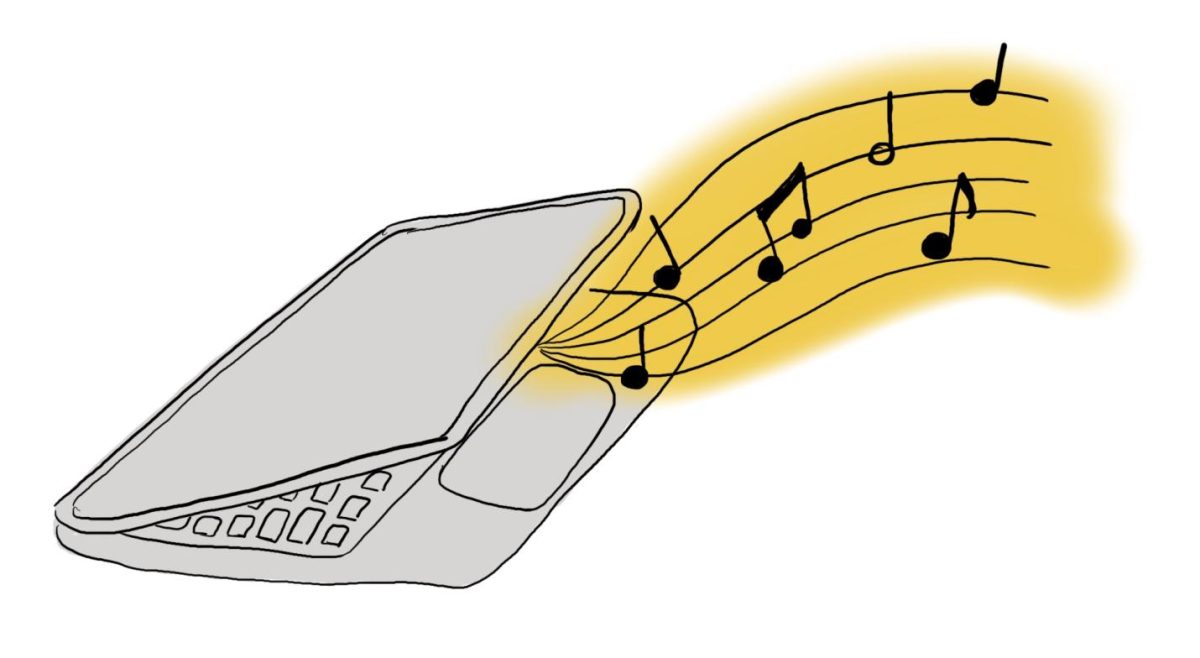
Authenticity. Expression. Creativity. Connection. These values make up the heart of music. They are the reasons why music was first created over 40,000 years ago, and why it continues to be created today. Even as the world changed around them, humans have never wavered in their love for sound and for the way it brings communities together. But what happens when music is made by a machine? What happens when, from start to finish, from composition to production, a record is built by computer code? As AI steadily expands its influence in every field, the music industry finds its core values being challenged; its future being reshaped. And the transformation is closer than we think.
On October 29th, Universal Music Group settled a major lawsuit against an AI-music platform named Udio. About a year prior, Universal had entered an ongoing legal case with Sony Music and Warner Music Group against Udio and Suno (another AI music company). In joining, Universal claimed that the AI companies had violated copyright laws in their model training process, by using millions of unlicensed songs and exploiting the work of artists. Udio and Suno maintained that their process was legal and fair.
At this time, Sony and Warner are still in conflict with Udio, and all three music corporations continue to litigate against Suno. However, the settlement between Universal and Udio has produced an unexpected result: the two companies are now collaborating on the development of an AI program for music creation and distribution. According to Universal CEO Lucian Grainge, this cooperation marks a shared desire to “foster a healthy commercial AI ecosystem in which artists, songwriters, music companies and technology companies can all flourish.”
This outcome and the involvement of the world’s leading music companies in legal battles has called attention to a new question: what does AI really mean for the future of music? Is this idealistic vision of a healthy AI ecosystem in music feasible? Although its use in other industries has presented opportunities for advancement, AI’s role in the arts remains controversial and unclear.
One big question circulating among artists and listeners is whether AI poses a threat to the authenticity and creativity of music. In the book This Is What It Sounds Like, record producer, cognitive neuroscientist, and Berklee professor Susan Rogers explored the intersection between music and psychology. In a chapter titled “Authenticity”, Rogers asserted that authenticity is “music’s lifeblood.” She wrote that “our most private dreams and fantasies” and “sense of self” are all tied together in a “neural network in the brain,” and that the records we fall in love with are the ones that “make us feel like our best and truest self.” In other words, one reason we enjoy music is because its authenticity connects to our deepest identities. We enjoy music if it stirs something in us—if we can feel the genuine emotional truth in an artist’s work.
Can AI achieve this level of expression? Many musicians don’t seem to think so. In April of 2024, over 200 artists signed a petition with the Artist Rights Alliance warning against AI, calling it an “assault on human creativity” and a means of “destroying the music ecosystem.” They urged AI companies to stop the development of technologies that could “undermine or replace the human artistry of songwriters.” The petition was signed by a number of industry icons, including Billie Eilish, Jon Bon Jovi, the Jonas Brothers, and Nicki Minaj. Even the estates of past legends like Bob Marley and Frank Sinatra were involved. If anything can be concluded from this initiative, it’s that there is a fine line between embracing new technologies and preserving the emotional depth of art.
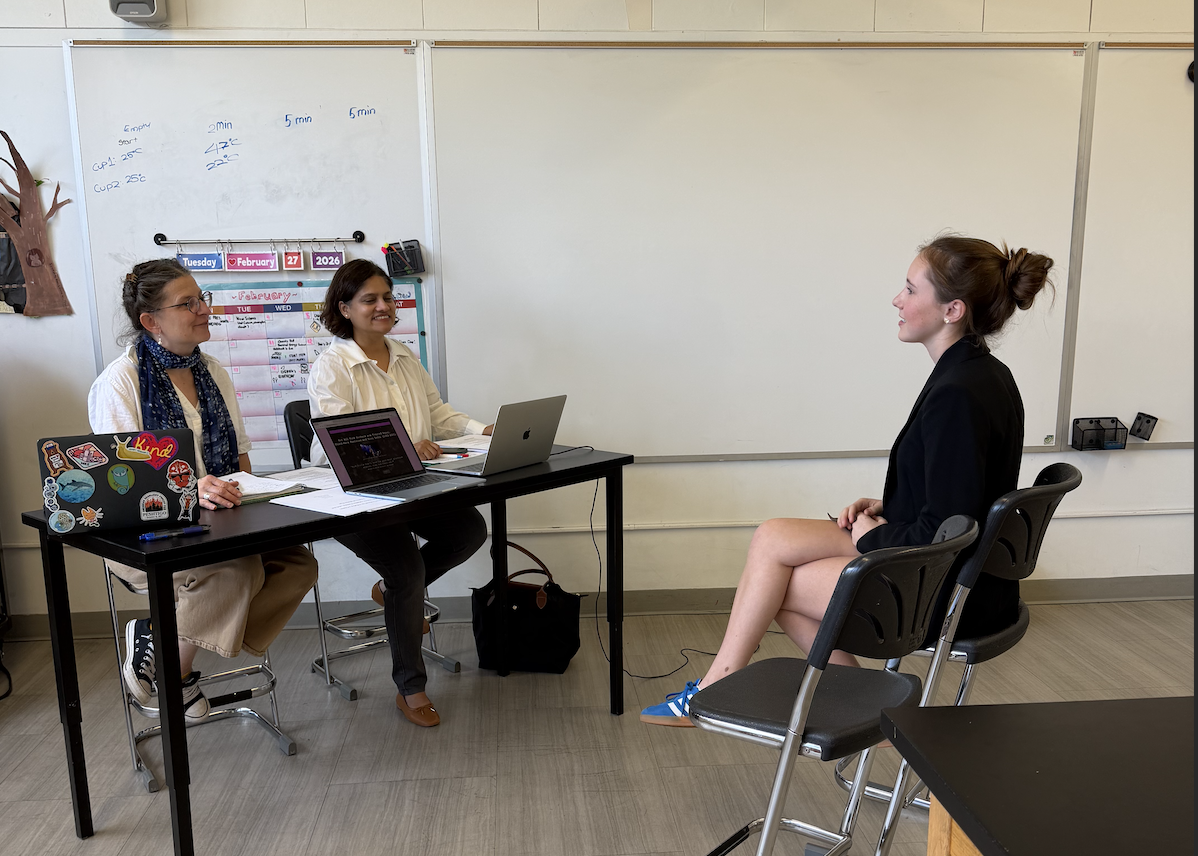
In light of this controversial issue, members of the music department at SHP contributed their insights. Ms. Rhonda Smith, SHP choir teacher, recounted her first experience with AI in music through a music appreciation class she had taught. The program was a very early AI generator, where you could input words and it would regenerate a voice. She then gave an example of a more recent program: ChatGPT’s own SongMakerGPT. “Compared to the first time I had heard about some kind of song generator… this was 100 times more refined,” Ms. Smith said. She added that “it was very impressive how human the voice was.” This example illustrates the speed at which AI technologies are learning and improving, and how their songs are much closer to becoming virtually unrecognizable from human-made records than one might think.
“I worry about the originality and the creativity aspect. When it comes to making music, there’s a very unique thing that I don’t think you can get in AI: it’s that human connection part, the relationship part,” Ms. Smith continued. “I worry something like SongMakerGPT is going to overlook the authenticity of creation.” At the same time, Ms. Smith noted that “it’s a good tool,” “it gives access,” and it presents possibilities for a new “generation of [music] sampling.” However, she reiterated that “something you can’t recreate is human expression,” and that “we need to learn how to use [AI] responsibly.”
Mrs. Stefanie Dubrowski, the Prep’s band and strings director, also shared her perspective. As a professional studio and touring musician before becoming a high school music teacher, she approached the issue from the record production side. “As far as music performance, I feel like that area is pretty safe. With AI, I feel like the problem is going to be music production—I feel like AI is going to oversaturate Spotify and other streaming devices,” Mrs. Dubrowski said. In fact, AI generated music is already creeping into streaming platforms right before our eyes. Take, for example, the Velvet Sundown on Spotify. Their music is heavily influenced by AI, and they are already verified, with over 3.5 million streams on their top track. Alternatively, listen to BrownHouse on YouTube Music. Their songs are 100% AI produced, from the lyrics to the instrumentalists to the mixing—even the background art is AI. Yet, at first listen, you wouldn’t suspect a thing.
To this integration, Mrs. Dubrowski posed the question: “How do we find the new artists when this really, really great AI music is getting pushed to the top? It might deter people from becoming music producers, music engineers. Jobs are going to die away.” She also said that if everything was done through AI, “there was no love put into it.” Finally, Mrs. Dubrowski cited the way in which “music goes through styles” and “follows culture.” “Styles of music naturally pop in and out because of producers coming in and bringing to light new artists… that might die too. There will be less real people making less real music to reflect what’s really happening [in the world].”
It is difficult to foresee the future of the music industry. What is evident, however, is that as AI evolves, it will present both opportunities and challenges for musicians and listeners alike. Authenticity and innovation are not mutually exclusive, but when it comes to the arts, a delicate balance will need to be found.